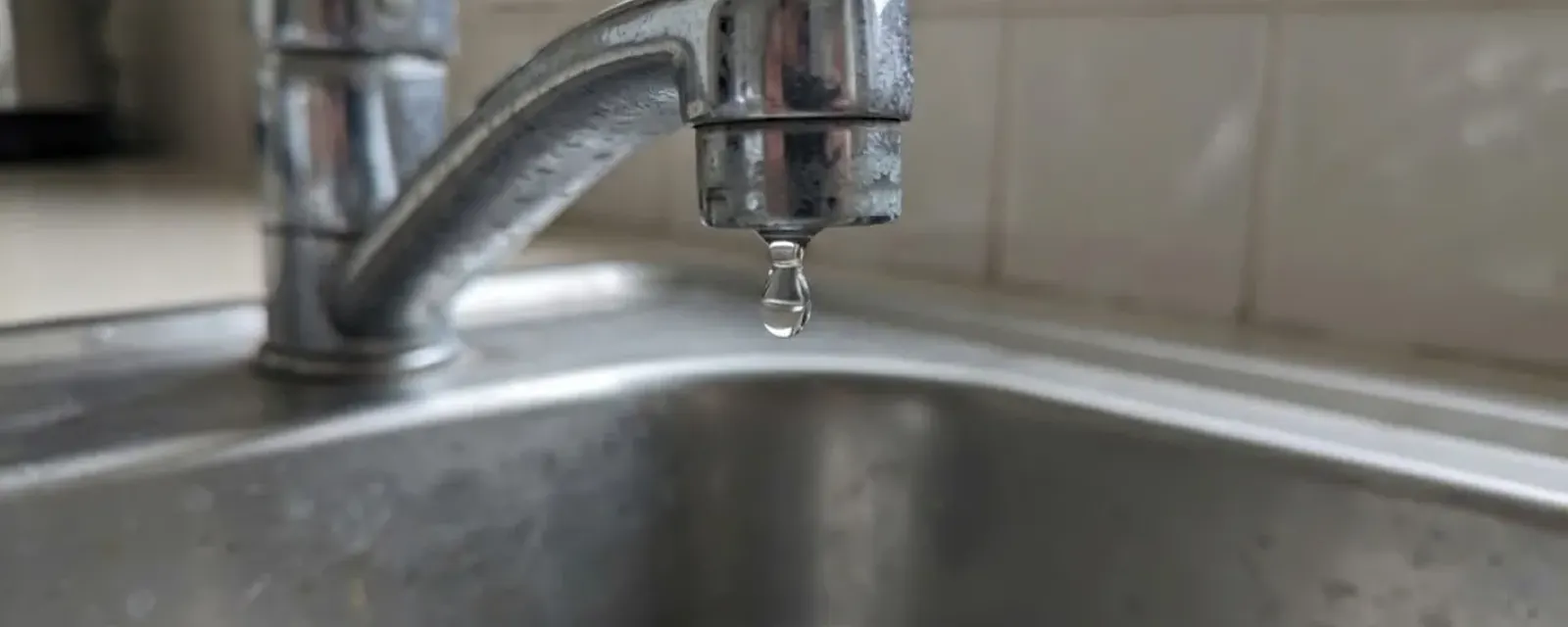
Air gets into water pipes after water has been shut off, after a main repair, when a water heater is drained or when a leak lets air in somewhere upstream. You can usually clear it by running every faucet, cold side first, starting at the lowest fixture and finishing at the highest.
If the sputtering returns, if it comes with low pressure or if you see wet spots or a rising meter, the cause is not just air. Call (805) 249-7135 and describe what you hear and where.
Why air gets into the pipes
| Cause | Typical sign | What to do |
|---|---|---|
| Recent water shutoff or city work | Sputtering at several taps, then it clears | Run taps to bleed air |
| Draining the water heater | Spitting from hot taps only | Refill fully and open hot taps |
| Failing valve or fitting | Hissing and intermittent sputter | Plumber to inspect |
| Leak on the supply side | Air plus low pressure or a spinning meter | Leak detection |
| Dissolved air released by heating | Fine bubbles in hot water, clear glass cloudy | Usually harmless, check after a minute |
| Water hammer | Banging, not just spitting | Arrestors or pressure check |
Cloudy water that clears from the bottom up in a glass is dissolved air and is harmless. Sputtering and spitting with a gap in flow is trapped air in a pipe.
How to bleed air from your pipes
Turn off the water heater
Switch off power or set gas to pilot so it does not fire dry.
Shut the main briefly
Close the main valve, then open the lowest faucet to relieve pressure.
Open all faucets
Open every tap in the house, hot and cold, starting upstairs.
Restore the water
Open the main slowly and let air escape as taps begin to flow.
Close taps in order
Close the lowest one first, then work upward once each runs steady.
Restart the heater
Only after hot taps run without spitting.
Open the main slowly. A sudden surge can cause water hammer and stress old joints.
Faucets still spitting?
Call the 24/7 line. A plumber can check for leaks, valves and pressure.
When it is not just air
Persistent sputtering that comes back each day suggests air entering through a damaged section or a faulty valve. Banging after a shutoff points to water hammer instead of air. A hissing sound with a drop in pressure may mean a leaking supply line, a stuck pressure regulator or a partly closed main.
- Check the meter with every fixture off. A moving dial means water is going somewhere.
- Look for damp drywall, soft flooring or green corrosion at fittings.
- Listen at the water heater for hissing or ticking.
- Test pressure at an outdoor spigot with a simple gauge.
If any check fails, see leak detection, and if a pipe has actually split, burst pipe repair is the emergency path.
Lompoc local note: city work and your side of the meter
The City of Lompoc supplies water from ten groundwater wells and publishes its quality report each year. When the city flushes mains, repairs a valve or shuts down a section, air can enter customer lines on the way back up. That is normal, and running taps for a few minutes usually clears it.
The city's water division handles the line up to the meter, and everything after the meter is the owner's responsibility. If sputtering follows a city notice, bleed the lines first. If it keeps happening without a notice, the problem may be on your side, in the house, and worth a plumber's look.
Pumps, softeners and water heaters as sources
Anything that opens the water system can let air in. A softener bypass left half open, a filter cartridge that was changed without bleeding, or a water heater refilled too fast are common reasons. After any service, open a high faucet and let it run until the flow is steady.
If you have a recirculation pump or booster pump, a worn seal can pull air in. A plumber can test it. Our water heater repair visits include checking the tank connections for air and noise, and we cover the whole service area and Santa Maria.
Noises and what they mean
| Sound | Likely meaning | Next step |
|---|---|---|
| Spitting and gurgling at open taps | Trapped air | Bleed the lines |
| Single loud bang when a valve closes | Water hammer | Check pressure and arrestors |
| Whistling or hissing | Partly closed valve or leak | Inspect valves and fittings |
| Rattling pipes at flow | Loose straps | Secure the pipes |
| Humming from the water heater | Element or sediment issue | Heater service |
Sound is a clue. Write down where and when you hear it, since that detail helps your plumber find the cause fast.
Checking pressure
A simple hose-bib pressure gauge costs little and shows your house pressure. Normal residential pressure is often between forty and eighty pounds per square inch. Readings far outside that range point to a regulator problem.
High pressure strains fittings and creates hammer. Low pressure can come from a partly closed valve, a clogged filter or a leak. Take the reading with everything off, then again with a tap open, and note both numbers.
If your pressure swings widely, a failing regulator is likely. Replacement is a short job, and it protects every fixture in the home.
A short checklist before you call
- Did the city or a neighbor recently work on the water line?
- Did you drain or service the water heater?
- Is the sputtering at one tap or every tap?
- Is it hot, cold or both?
- Is the water meter moving with everything off?
- Is there any new noise, odor or wet spot?
Answers to these questions let a plumber narrow the cause on the phone. They also help us decide if a same-day visit is needed. Water on the floor always counts as urgent, so use the 24/7 line.
Preventing it next time
- Open a high faucet when you restore water after any shutoff.
- Refill the water heater before restoring power.
- Open the main slowly, never all at once.
- Replace old shutoff valves that do not seal.
- Keep a note of the main valve location for everyone in the house.
According to the California Plumbing Code, static water pressure above 80 pounds per square inch calls for a pressure regulator, which is why a pressure gauge reading belongs in any diagnosis of banging or spitting pipes.
Questions homeowners ask
Trapped air is not harmful to drink. It can stress joints if it causes water hammer.
Air in the water heater or its hot lines is the usual cause, often after draining the tank.
Yes, a supply side leak can let air in when pressure drops. Check the meter.
It can. Main flushing and valve work let air into customer lines. Running taps for a few minutes usually clears it.
Until water flows steadily with no spitting, often several minutes per tap.
When there is a hissing leak, water on the floor, or a meter running with everything off.