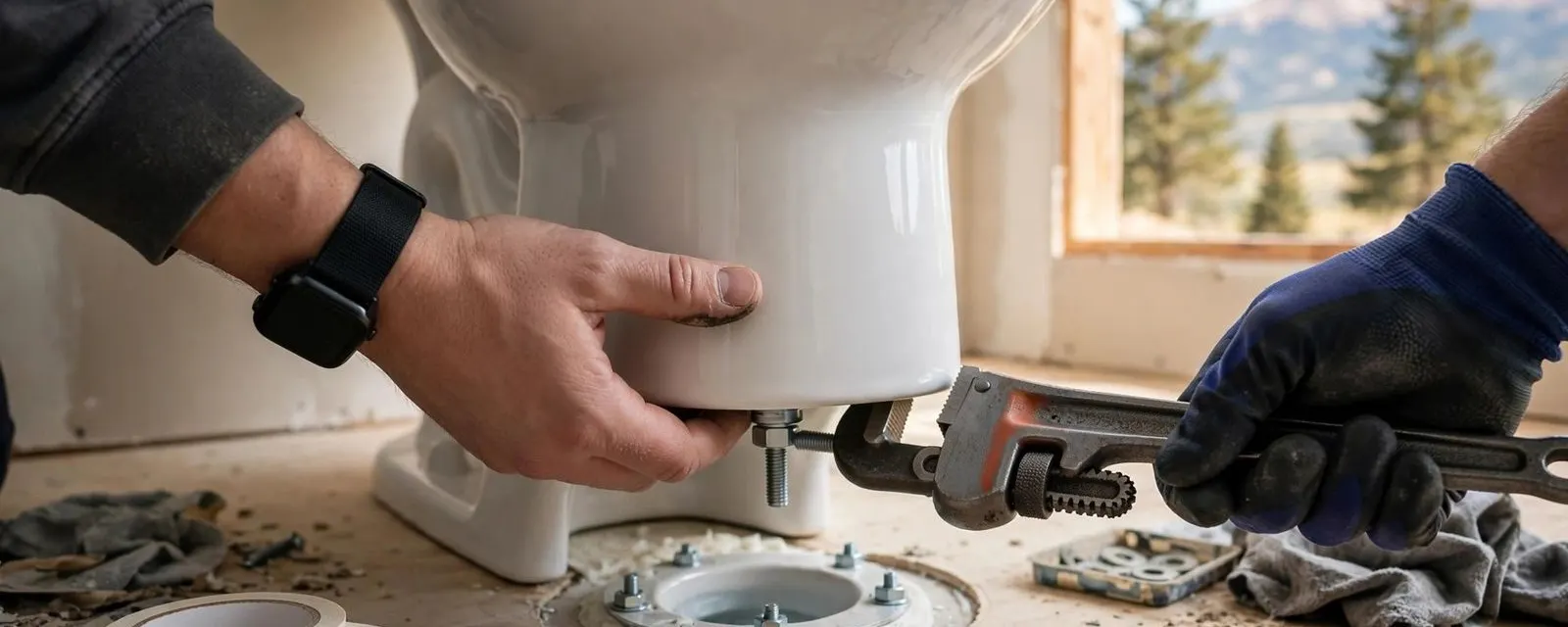
A crack in the porcelain below the waterline almost always means replacement. Sealants and epoxy do not hold against constant water and weight. A craze line or surface hairline above the waterline may be cosmetic, but watch it, because it can grow.
If water is on the floor now, close the shutoff valve behind the toilet and stop flushing. Then call (805) 249-7135 if you want a plumber to confirm whether the crack is structural.
Where the crack is decides everything
| Crack location | Likely cause | Verdict |
|---|---|---|
| Below the waterline in the bowl | Impact, stress or freezing | Replace the toilet |
| In the tank, below the water level | Overtightened bolts or impact | Replace the tank or toilet |
| Hairline above the waterline | Craze or thermal stress | Watch it, may be cosmetic |
| At the base or flange | Loose mounting or rocking | Replace and reset the flange |
| Crack around bolt holes | Overtightening | Replace the tank or bowl |
To check, dry the area with a towel, then look and feel for moisture or a seeping line over the next hour. A small drip on a paper towel is proof.
What to do right away
Shut the supply
Turn the oval handle behind the toilet clockwise until it stops.
Empty the tank
Flush once to drain the tank, then sponge out what remains.
Protect the floor
Place a towel and a shallow pan if water is still seeping.
Photograph the crack
Pictures help your plumber and your insurer.
Skip the epoxy
Patches are not a reliable fix for a pressure-bearing crack.
Toilet leaking now?
Shut the valve and call. A plumber can often replace it the same day.
Why toilets crack
- Overtightening tank bolts or closet bolts, the most common reason.
- Dropping a heavy lid or object on the rim or tank.
- Sitting weight on a loose toilet that rocks.
- Sudden temperature changes in older porcelain.
- Age, since glaze crazing opens the surface over the years.
A rocking toilet is a warning. It wears the wax ring and stresses the base. If yours moves, see our toilet repair page. Fixing the cause matters, or a new bowl will crack the same way.
Lompoc local note: permits, water use and replacements
The City of Lompoc building division says fixing leaks is exempt from a permit when you are not rearranging the plumbing. Swapping a toilet for a like-for-like model in the same spot is a straightforward fixture replacement. Moving the toilet or changing the drain needs a permit.
California's plumbing code requires low-flow toilets in new installations. When you replace, you will choose a high efficiency model, and fit matters: the rough-in distance from the wall, usually twelve inches, must match. Hard water at about 293 ppm in the city's 2025 report also scales rim jets, so pick a model with accessible jets and descale them every few months.
What replacement involves
A plumber shuts the water, removes the old toilet, scrapes the old wax ring, inspects the flange and sets the new toilet on a fresh seal. A damaged flange or soft subfloor is repaired first, because a new toilet on a bad base will leak again.
Tank cracks and bolt leaks
Many leaks blamed on cracks are really worn gaskets or loose bolts. The tank to bowl gasket, the tank bolts and the supply connection can all drip. Dry them and watch which one wets first.
If the leak comes from the bolts, replacing the rubber washers and the bolts may fix it. Tighten gradually and evenly, a little at a time, and stop as soon as it seals. Overtightening is how many tanks crack in the first place.
If the tank itself has a crack in the porcelain, replacement is the reliable answer. Many tanks are matched to their bowl, so ask whether a tank can be bought alone or whether a new toilet is better.
Choosing a replacement toilet
- Measure the rough-in from the wall to the center of the floor bolts.
- Pick an elongated or round bowl to fit the space.
- Look for a model with a good flush rating.
- Choose a tank lid that is hard to chip.
- Ask about a soft close seat.
- Confirm the supply valve is in good shape and replace it if not.
A mid-range model with a simple flush design is often the most dependable. Complicated pressure systems are noisier and cost more to repair.
Preventing the next crack
- Tighten tank and closet bolts evenly and only until snug.
- Use rubber or plastic washers, not metal against porcelain.
- Fix a rocking toilet right away with shims or a new seal.
- Lift the tank lid with both hands and set it on a towel.
- Avoid dropping cleaning tools or heavy items into the tank.
- Check the supply line and valve once a year for drips.
A toilet that is installed level and tight can last for decades. Most cracks come from forces that a careful install avoids.
How a plumber confirms a crack
A plumber uses a dry paper towel, a flashlight and a small amount of dye in the tank or bowl. Colored water that appears outside the porcelain shows exactly where the leak is. This avoids replacing a toilet that only needed a new gasket.
If the crack is confirmed, the plumber reviews the flange, the floor and the supply valve before quoting. That way the new toilet goes on a sound base, and you avoid a second visit.
Ask for the old wax ring and supply line to be replaced as part of the job. They cost little and prevent a repeat leak.
Water damage check
A slow leak from a crack can soak a subfloor for weeks before you see it. Press on the floor near the base. Soft or spongy wood means damage that needs repair along with the toilet. Look under the room, in a crawlspace if you have one, for stains.
We handle the swap under plumbing installation and serve the whole service area, including Santa Maria. If water is spreading fast, use the 24/7 line.
Questions homeowners ask
Not reliably. It is a short-term stopgap at most for a crack below the waterline.
A craze line above the waterline may be cosmetic. Monitor it for moisture.
Overtightened bolts or a rocking base are the usual causes.
A like-for-like swap is a fixture replacement. Moving the drain or changing lines needs a permit, so confirm with the building counter.
Often one to two hours when the flange is sound.
It may cover sudden water damage. Ask your insurer.