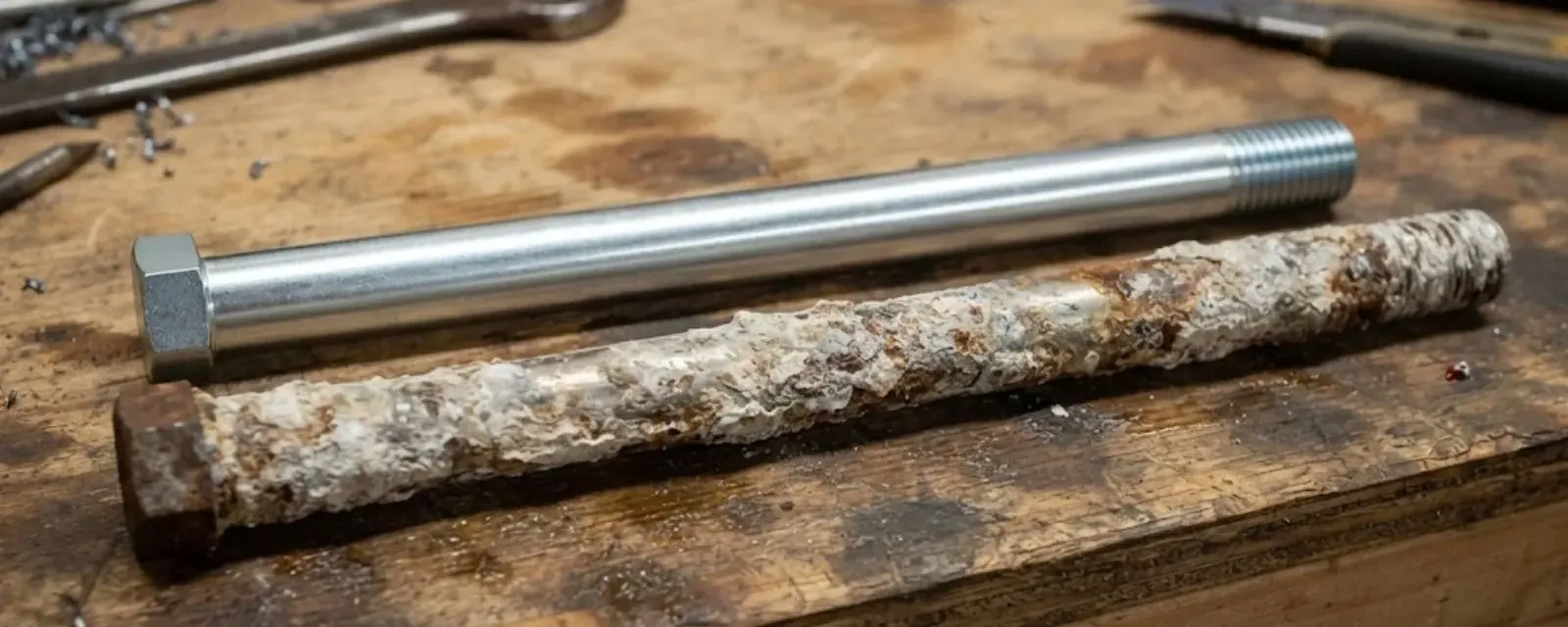
The anode rod is a sacrificial metal rod inside your tank. It corrodes so the steel tank does not. Most manufacturers suggest checking it every two to three years, and replacing it when the metal is mostly gone, usually when the core wire shows or the rod is pencil thin.
You can replace it yourself with a 1-1/16 inch socket, a breaker bar and about an hour. If the rod will not budge, if the heater is already leaking or if the tank is over ten years old, call (805) 249-7135 and let a plumber decide whether a rod is still worth the money.
What the anode rod does
Water inside a steel tank wants to rust it. The anode rod is made from magnesium, aluminum or a zinc alloy, which is more reactive than steel, so the rod rusts first. Once it is gone, the tank wall takes over, and a tank that has lost its anode can fail within a couple of years.
That is why a rod replacement is often called the cheapest way to extend a heater. It does not repair a tank that already leaks. It slows the process that causes the leak.
| Rod type | Strengths | Watch for |
|---|---|---|
| Magnesium | Strong protection, standard in many tanks | Wears faster in very hard or mineral-rich water |
| Aluminum or aluminum-zinc | Lasts longer in some water | Can produce a sulfur odor in some supplies |
| Powered anode | No sacrificial metal, needs electric power | Higher cost, not for every tank |
Signs the rod is nearly gone
- Popping, crackling or rumbling noises as the heater runs, often from scale and sediment.
- Rust-colored water at the hot taps only, not the cold.
- A rotten-egg smell from hot water that cold water does not have.
- A tank that is over about five years old and has never had the rod checked.
- A rod pulled from the tank that is thin, pitted or has bare wire showing.
Many of these signs have other causes, so treat them as a reason to look, not as proof. A heater that is already leaking from the tank body needs water heater replacement, not a rod.
Rod stuck or tank leaking?
Call the 24/7 line. A licensed plumber can check the rod or advise on replacement.
Step by step: replacing the rod
Power and water off
Turn the gas control to pilot or flip the breaker, then close the cold water valve above the heater.
Relieve pressure and drain a few gallons
Open a hot tap upstairs and drain a few gallons from the tank drain so the water level sits below the rod.
Break the rod loose
The rod sits under the hex head on top of the tank. Use a breaker bar, because it is often tight. A pipe on the handle helps.
Inspect and compare
Pull the old rod straight up. Check its condition and its length against the new one.
Seal and install
Wrap the threads with plumber's tape, thread the new rod in by hand and tighten firmly.
Refill and check
Open the cold valve and a hot tap until water flows steadily. Restore power only after the tank is full.
Some tanks have tight overhead clearance. A flexible segmented rod solves that, because it bends to fit under a low ceiling or shelf.
When to stop and call a plumber
Stop if the hex head will not turn after a firm effort, because the tank threads can be damaged. Stop if rust-colored or sandy water pours out, which points to heavy sediment. Stop if the tank leaks anywhere after you touch it.
A plumber can try an impact wrench, flush out the sediment and judge the tank. Our water heater repair visit can include checking the rod, and if the tank is near the end, the honest answer is replacement.
Lompoc local note: water quality and your anode rod
The City of Lompoc publishes an annual water quality report. In the 2025 report the ten groundwater wells that supply the city averaged 293 ppm of hardness, 817 ppm of total dissolved solids, 134 ppm of sodium and 424 ppm of sulfate, with a pH near 8.4.
Hard, mineral-rich water leaves scale on tank bottoms and heating surfaces, and that makes it worth checking the rod sooner than the two to three year guideline if you have never looked at it. The report does not predict how fast any one rod wears, so judge by the rod you pull. Sulfur smell from a magnesium rod can be reduced by switching to an aluminum or powered type.
The same report covers the Frick Springs system in Miguelito Canyon, where hardness averaged near 405 ppm. Homes on that system should look at the rod even sooner.
Tools and parts checklist
Gather everything before you shut the water off, because a half-finished job leaves the house without hot water. A 1-1/16 inch socket fits most rods, though a few brands use a different size. A breaker bar or a long ratchet gives the leverage you need.
- Replacement rod that matches the length and thread of the old one.
- Plumber's tape for the threads on the new rod.
- A garden hose for draining a few gallons.
- A bucket, rags and a flashlight.
- Gloves, since the tank top can be hot and the rod edges can be sharp.
Check the model plate on the heater for the brand and size. Some heaters have a combination hot outlet and anode, which is a different part. If you are not sure, take a photo of the top of the tank to the parts counter.
What to do with the old rod
Look at the rod you pulled. A rod with more than half its metal gone, or with bare core wire showing in several places, is done. A rod that still looks thick and smooth can go back in or be replaced on the next check.
Heavy, chalky coating on the rod points to hard water and fast wear. A rod covered in a black or slimy film can point to bacteria, which is a flush and disinfection matter. Write the date on the new rod's package or on the tank so you know when to look again.
Dispose of the old rod with scrap metal. Magnesium and aluminum rods are recyclable, and the steel core is too.
What the job costs, and the better question to ask
A rod costs little compared with a heater, and the tool is the only other expense. The better question is how much life remains in the tank. A ten year old tank with a corroded rod may be near the end, and replacing it is a matter of time.
If you are getting ready to replace the whole heater anyway, see water heater installation for the options. For help, call the 24/7 line, and our dispatch covers the whole Lompoc service area and Santa Maria.
Questions homeowners ask
Every two to three years is common guidance. Check sooner if the water is hard or the heater is over five years old.
Yes. You only need to lower the water level below the rod, which a few gallons of draining does.
No. A rod protects the tank from future corrosion. A tank that already leaks must be replaced.
A rod swap is maintenance, not a system replacement. Permit rules vary, so ask the City of Lompoc building division if you are unsure.
Check it more often. The city's 2025 report lists hardness near 293 ppm, so look at the rod on a two year schedule and replace it when it is mostly gone.
Sometimes. Bacteria reacting with a magnesium rod can cause it. A different rod type or a tank flush can help.