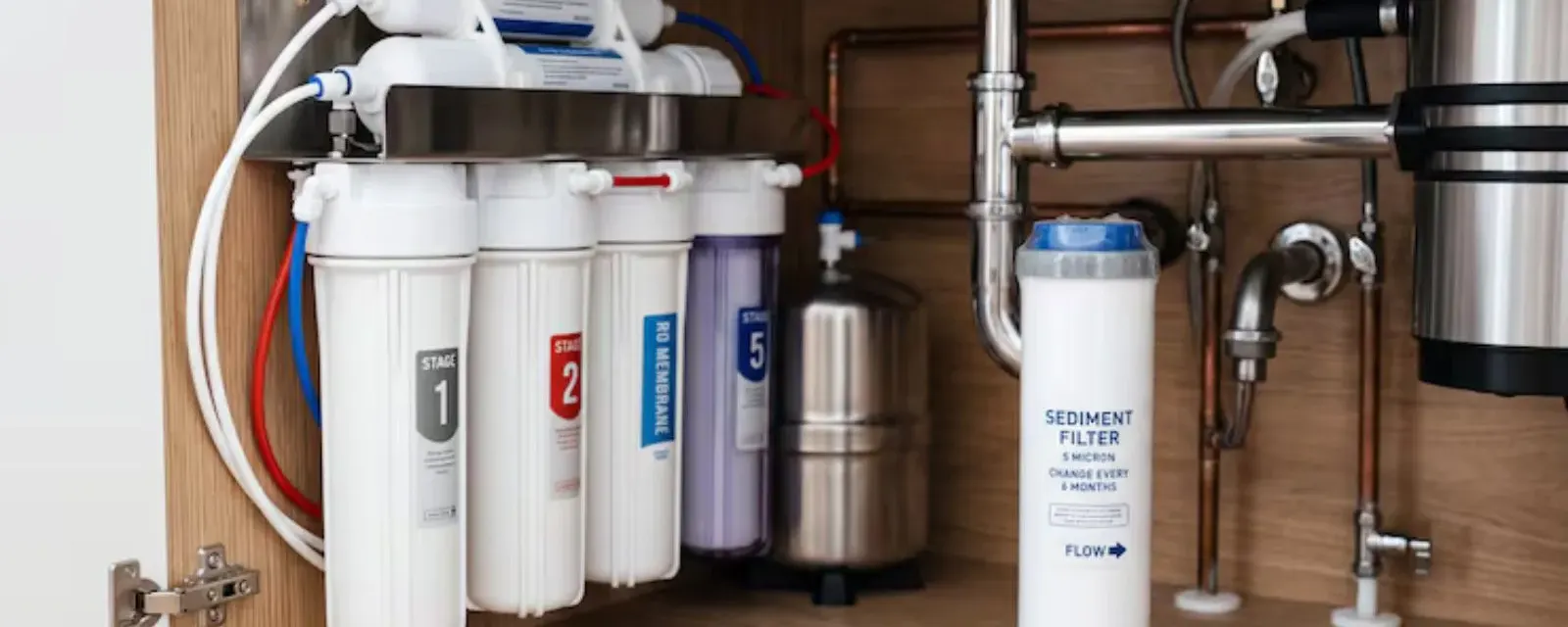
A reverse osmosis system pushes water through a membrane that blocks most dissolved solids. It sits under the kitchen sink and feeds a separate faucet for drinking and cooking. It lowers total dissolved solids, which is a good fit for water with a mineral taste, and it does not treat the rest of the house.
Lompoc's tap water meets state and federal standards and has a high mineral content. If you want a cleaner taste, an under-sink RO system is a common answer. Call (805) 249-7135 to talk through sizing and installation.
What reverse osmosis does and does not do
| Question | Answer |
|---|---|
| Reduces dissolved minerals and salts | Yes, substantially |
| Removes chlorine taste | Usually, through a carbon pre-filter |
| Softens water for the whole house | No, it treats one tap |
| Wastes some water | Yes, a portion goes to drain |
| Needs maintenance | Yes, filters and the membrane need replacing on schedule |
| Lowers sodium | It can reduce it at the drinking tap |
RO is a point-of-use system. It treats the water at one faucet for drinking and cooking, which is a small fraction of your use. That keeps the cost and the wastewater modest.
Lompoc local note: the numbers behind the taste
The City of Lompoc's 2025 water quality report lists these city averages: total dissolved solids 817 ppm, sodium 134 ppm, hardness 293 ppm, sulfate 424 ppm and chlorine near 1.00 ppm. The report states that the water met all United States EPA and California drinking water health standards.
Those values explain the taste complaints. The standards are met, and the water is mineral-rich. An RO system lowers dissolved solids at the tap, and its carbon stage reduces chlorine. If you are on a sodium restricted diet, ask your doctor, because RO can lower sodium at the drinking tap but whole-house water would still carry it.
Thinking about RO?
Call for sizing advice and a clear price. Same-day appointments are offered when available.
RO versus a softener versus a carbon filter
These do different jobs. A softener fixes scale and spotting everywhere. A whole-house carbon filter reduces chlorine for every tap. An RO fixes drinking water. Some homes use all three.
If the problem you notice is scale on faucets and dull glassware, a softener is the answer. If it is taste, RO or carbon will help. Our water softener and filtration page covers the sequence, and a whole-house carbon filter is the other common choice when taste and smell are the complaint.
What a typical installation involves
Choose the location
Under the kitchen sink, with room for the tank.
Add the faucet
A small drinking faucet is mounted on the sink or counter.
Tap the supply and drain
A cold water line feeds the unit and a drain saddle takes the waste.
Flush and test
New filters are flushed and the unit is tested for leaks.
If a countertop hole is needed, the installer will use the existing soap dispenser opening or drill a new one. If your kitchen is being remodeled, tell us, because it is easier to plan the system with the sink.
Maintenance, costs of ownership and waste
Pre-filters are generally replaced about once a year, and the membrane every few years, but the manufacturer's schedule governs. Skipping changes makes water taste worse and can damage the membrane.
Waste ratios vary by model. Efficient units reduce the wastewater, and a permeate pump helps. Ask about it when you choose. Cost of ownership includes filters over time, so compare the whole picture, not just the sticker.
Sizing the system for your kitchen
Most homes need a unit that fills a small storage tank overnight and delivers a glass of water on demand. Larger households or heavy coffee drinkers may want a higher capacity tank or a tankless RO unit with a pump. The right choice depends on usage and space.
Smell, taste and troubleshooting
If RO water tastes flat, that is normal because minerals are mostly gone. A remineralization stage can help. If it tastes stale, the tank may need sanitizing or the filters are overdue.
A slow dribble from the RO faucet can mean low tank pressure, a clogged pre-filter or a fouled membrane. A drain that gurgles loudly may need an air gap check. A plumber can test the tank pressure and swap parts in a short visit.
Keep a record of filter changes. Writing the date on the filter or on a sticker under the sink makes the schedule easy to follow.
Myths worth clearing up
- RO does not make tap water unsafe or safe. It changes the mineral content and removes many dissolved substances.
- RO water is not acidic enough to harm pipes in a point-of-use setup.
- You do not need RO on every tap. The kitchen drinking faucet is the usual spot.
- A bigger tank does not mean better water. It only stores more of it.
- Installing RO does not remove the need for a softener if scale is the complaint.
Knowing what the system does and does not do keeps expectations realistic. For an honest recommendation, call and describe what you notice at the tap.
What to do before an RO install and when to call
- Clear the cabinet under the sink and know where the cold valve is.
- Do not cut the countertop yourself, because a wrong hole is expensive.
- Call a plumber if you see a leak at a fitting after installation.
- Change filters on the maker's schedule and write the date on the unit.
- Do not drink from a system that has been out of service for weeks until it is flushed.
Who should consider an RO system
- Households that notice a mineral taste in coffee or tea.
- People who cook with a lot of tap water.
- Anyone with a refrigerator ice maker or water line that clogs with scale.
- People who want to reduce dissolved sodium at the drinking tap, with their doctor's advice.
We install systems across the service area, and if you are in Santa Maria, where groundwater hardness is higher, the same logic applies. For add-on lines and faucets, plumbing installation covers the work.
Questions homeowners ask
Lompoc water meets standards according to the city. RO changes taste and mineral content. If you have a specific health concern, ask your doctor.
Yes, a portion goes to the drain. Efficient models reduce it.
If you want scale protection for the house, yes. RO treats only the drinking tap.
Follow the manufacturer's schedule, usually annually for pre-filters and every few years for the membrane.
The City of Lompoc's 2025 report lists total dissolved solids near 817 ppm and hardness near 293 ppm, with all standards met.
Yes, with the owner's permission. Under-sink units are easy to remove later.