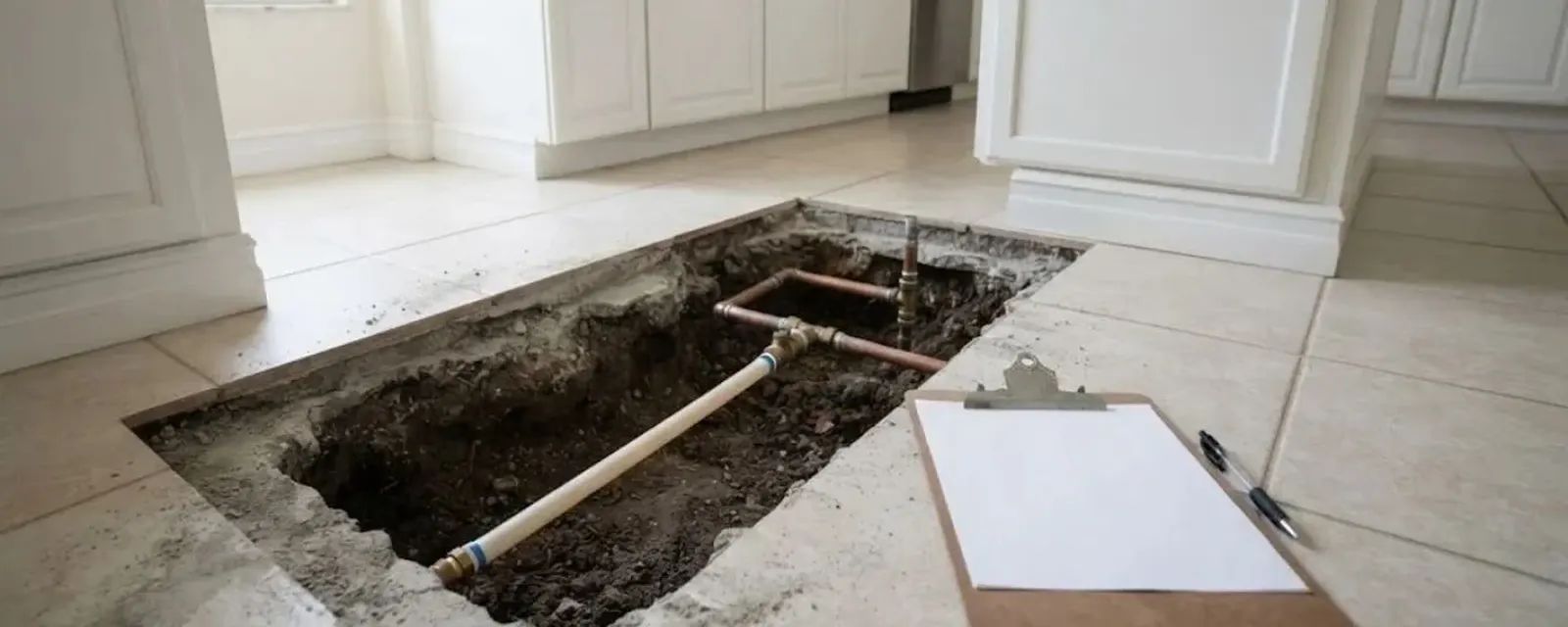
There are three common ways to fix a slab leak: break the slab and repair the pipe in place, reroute the line through walls or the attic to bypass the slab or replace the pipes in the house. Each trades cost, disruption and how long the fix is likely to last.
This guide compares them so you can ask better questions. For detection and diagnosis, see our slab leak service page. If water is rising, shut the main and call (805) 249-7135.
The three repair routes
| Option | How it works | Best when | Trade-off |
|---|---|---|---|
| Spot repair through the slab | Locate the leak, cut the concrete, repair the pipe | One leak, sound pipe elsewhere | Floor demolition and patching |
| Reroute | Abandon the slab line, run new pipe in walls or attic | Repeated leaks in one line | Opens walls, adds visible runs |
| Repipe | Replace the supply system | Many failing lines or old pipe | Largest scope and cost |
| Pipe lining or coating | Coat the inside of the pipe | Select situations only | Not suited to every pipe or break |
Your plumber should be able to explain why one route fits better than another, using what they found in testing.
How the decision gets made
Ask whether the quote includes patching the floor, moving furniture, permits and testing. Those items vary the most between quotes.
Leak under the slab?
Call now. A plumber can confirm the leak and lay out your options.
What happens on repair day
Confirm the location
The plumber re-checks with listening gear before cutting.
Protect the home
Floors are covered, dust is controlled and furniture is moved.
Cut and expose
A small section of slab is opened to reach the pipe.
Repair or reroute
The leak is fixed or the line is bypassed.
Pressure test
The system is tested before concrete or walls are closed.
Close and patch
Concrete or drywall is patched, with finish flooring done separately unless included.
Lompoc local note: permits and utilities
According to the City of Lompoc building division, any addition or relocation of water lines always requires a permit. Rerouting a supply line through walls counts as relocation, so expect a permit and an inspection. A plain leak repair is treated differently, because the city exempts fixing leaks when you are not rearranging the setup.
Another local point is water chemistry. The city's 2025 report lists pH near 8.4, sulfate near 424 ppm and hardness near 293 ppm, and it reports that lead and copper sampling of 32 homes in August 2025 found no sites over the action levels. That describes the supply. The condition of the copper inside your slab is what a plumber has to judge on site.
Insurance, mold and paperwork
Many policies cover water damage that results from a sudden leak, and some cover the cost of reaching the pipe. They rarely cover the pipe itself. Call your insurer early, describe the leak and ask what documentation they need.
Dry the area quickly. Flooring and baseboards that stay wet can grow mold within days. Ask your plumber to note readings from a moisture meter, which help with claims. If you have lifted or buckled flooring, say so on the call.
Signs that point to a slab leak
Warm spot on the floor
A hot water line leaking below can warm the slab.
Water bill jumps
A steady rise with no change in use is a classic clue.
Sound of running water
You hear water with every fixture off.
Damp carpet or lifted flooring
Moisture rising through the slab.
Low water pressure
Pressure drops as water escapes underground.
Cracks in walls or tile
Soil movement from long-running leaks.
None of these proves a slab leak alone. Together they justify a proper test. Check the meter first with all water off.
After the repair
Expect the plumber to test pressure and leave the work area clean. Keep the report and photos. Ask for notes on pipe condition elsewhere in the house, since a second leak in the same system is a real possibility.
Dry the floor and walls fully. Watch the water meter for a few days and keep an eye on your water bill. Any new warm spots or damp areas should be reported right away, while the warranty is active.
Questions to ask before you approve a plan
- How was the leak located, and what is the margin of error?
- What is the fix if the slab is thicker or the pipe is deeper than expected?
- How will dust and noise be controlled?
- Is flooring replacement included or separate?
- What happens if a second leak shows up during testing?
- How long is the warranty on the repair?
A solid plan includes answers to each of these. If a contractor skips them, keep asking.
Choosing a contractor
- Ask for the plan in writing, with scope and what is excluded.
- Ask how the leak will be located and confirmed.
- Ask who pulls the permit and schedules inspection.
- Ask what the warranty covers, parts and labor separately.
- Verify the license on the state contractors board site yourself.
Our slab leak repair page explains the detection side, and repiping covers the whole-house option. We serve the Lompoc area and Santa Maria.
Any replacement piping follows the California Plumbing Code (Title 24, Part 5, 2025 edition, effective January 1, 2026), which is based on the Uniform Plumbing Code (UPC), and the inspector applies that code when a reroute is permitted.
Questions homeowners ask
It can be when a line leaks repeatedly. It also opens walls, so weigh the disruption.
Sometimes, when the leak is in an accessible spot. Most spot repairs affect the floor above.
Persistent leaks can undermine soil support. Fix it promptly and ask your plumber to note the surrounding conditions.
Rerouting counts as relocating water lines, which the city says always needs a permit. Confirm with the building counter.
Spot repairs can take a day. Reroutes and repipes take longer.
Ask for the denial in writing and review your policy language for water damage coverage.