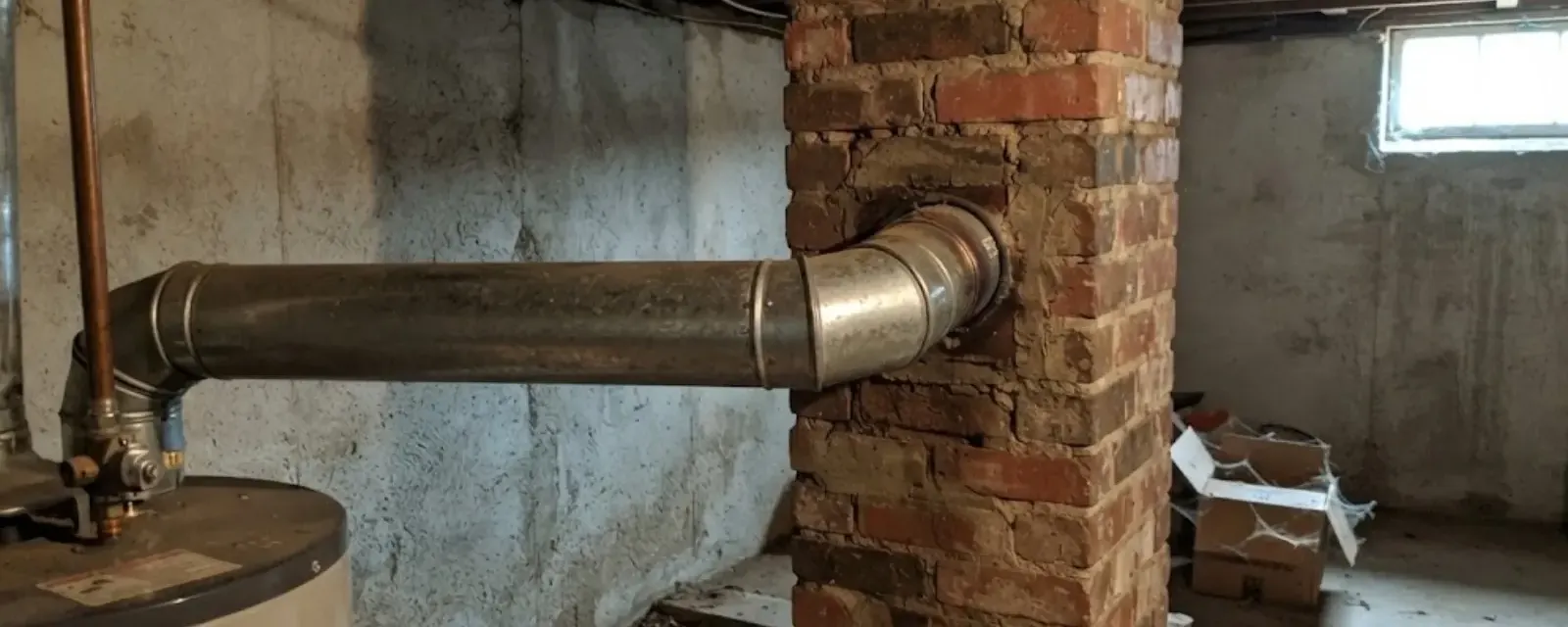
The right vent pipe for a tankless water heater is the type the manufacturer lists for that exact model. Many condensing models allow PVC, CPVC or polypropylene. Non-condensing models usually require stainless steel, because their exhaust is hotter. Using the wrong material is a safety and warranty problem.
Do not guess from what is already on the roof. Call (805) 249-7135 and let a plumber check the model, the run length and the termination point before ordering parts.
Why vent material matters
Gas water heaters produce exhaust that must leave the house safely. Condensing tankless units extract extra heat, so the exhaust is cooler and wet, and it is acidic. Standard metal vent pipe would corrode. Non-condensing units produce hotter exhaust that plastic cannot take.
| Vent material | Typical use | Notes |
|---|---|---|
| Stainless steel (single or double wall) | Non-condensing and some condensing units | Heat and corrosion resistant, higher cost |
| PVC or CPVC | Many condensing units only | Check the model's temperature rating |
| Polypropylene | Many condensing units | Specific to listed systems |
| Galvanized or B-vent | Not for most tankless units | Can fail quickly with condensate |
Only the manufacturer's list matters. If the manual calls for stainless, it is not an option to downgrade.
Sizing, length and termination
A vent that is too long or has too many turns raises error codes and lowers efficiency. Your plumber should calculate the equivalent length before work starts.
Planning a tankless vent?
Call for a model and route check before you buy parts.
Lompoc local note: coastal air and permits
Lompoc has a cool coastal climate. Fog is common, and the area sits near the ocean, so salt-laden air is part of daily life. Stainless steel resists corrosion well, but exposed fasteners and low-grade fittings can still stain. Use the grade the manufacturer lists and ask the installer about sealed terminations.
The City of Lompoc building division requires a permit before work on plumbing, gas and mechanical systems, including replacing systems. Venting is part of the mechanical and gas inspection, so plan for it. The California Plumbing Code, Title 24 Part 5, 2025 edition effective January 1, 2026, is the code the inspector applies.
Common vent mistakes
- Reusing the old tank heater vent on a tankless unit.
- Mixing parts from different manufacturers.
- Missing slope on a condensing vent run.
- Termination too close to a window or air intake.
- Gaps at joints that are not sealed per the manual.
- No condensate drain or neutralizer where one is required.
Any of these can cause error codes, nuisance shutdowns or a carbon monoxide risk. A carbon monoxide alarm near the sleeping area and the heater is inexpensive protection.
Condensate and drain details
Condensing tankless units release acidic condensate, usually a few cups per hour at full firing. That must drain to a suitable location, often through a neutralizer cartridge to protect the drain line. The neutralizer needs replacement on a schedule.
Plan the drain route early. A unit on an exterior wall may drain outdoors in some jurisdictions, and in others it must tie into a drain. Ask the building counter or your plumber which applies here.
Direct vent versus power vent
A direct vent unit uses sealed pipes, one for exhaust and one for intake, so it never draws air from the room. A power vent unit uses a fan to push exhaust out, and may use room air. The setup changes the pipe count, the routing and the space around the heater.
| Type | Air source | Notes |
|---|---|---|
| Direct vent | Outside, through a second pipe | Common for sealed combustion and tight homes |
| Power vent | Room air in some models | Needs adequate combustion air |
| Outdoor unit | Outside air | Short or no vent pipe |
Inspection and upkeep
Look at the vent run once a year. Check for loose joints, rust stains, drips at the elbows and sagging sections. Make sure the termination is clear of leaves, nests and snow or ice if it ever builds up.
If the display shows a vent-related error code, do not reset it repeatedly. The code means the unit sensed a problem, and the cause needs to be found. Turn the unit off and call a plumber if you smell exhaust.
What a vent quote should include
- The vent material and diameter, named by the manufacturer's part type.
- The total straight length and the number of elbows.
- The roof or wall penetration, flashing and sealing details.
- The condensate drain or neutralizer if the unit is condensing.
- The permit and inspection fee, and who handles it.
- Removal and capping of the old flue.
A quote that says only "vent kit" hides the details that cause problems later. Ask for the specifics in writing.
Replacing a tank heater with a tankless unit
Most tank heaters vent through a large draft hood into a masonry or B-vent flue. A tankless unit has different needs. The old flue may be capped, removed or relined, and a new vent is installed to the manufacturer's rules.
That change affects the roof, the attic and sometimes the neighboring appliances that share the flue. A furnace or boiler sharing the same flue can lose draft when the water heater is removed. A plumber must check this before the old vent is changed.
Plan for the extra work in the quote. It is part of doing the job safely.
Planning an install
Choose the model
Pick condensing or non-condensing based on gas, space and budget.
Read the vent chart
Match material, diameter and maximum length.
Plan the route
Short and simple beats long and clever.
Permit and inspection
The permit covers gas, vent and electrical.
Test combustion
After install, a combustion check confirms safe operation.
Our tankless water heater and water heater installation pages explain the full process, and an outdoor unit can skip most of the vent work. We serve the whole service area and Santa Maria.
Questions homeowners ask
No. Only models listed for it. Non-condensing units need stainless steel.
Follow the manual. Some units specify it, especially near combustibles.
Usually not. Tankless units have different exhaust and vent size.
Good stainless resists it well. Use the listed grade and inspect terminations occasionally.
The California Plumbing Code, Title 24 Part 5, 2025 edition effective January 1, 2026, along with the manufacturer's instructions.
It is strongly advised near the heater and sleeping areas.