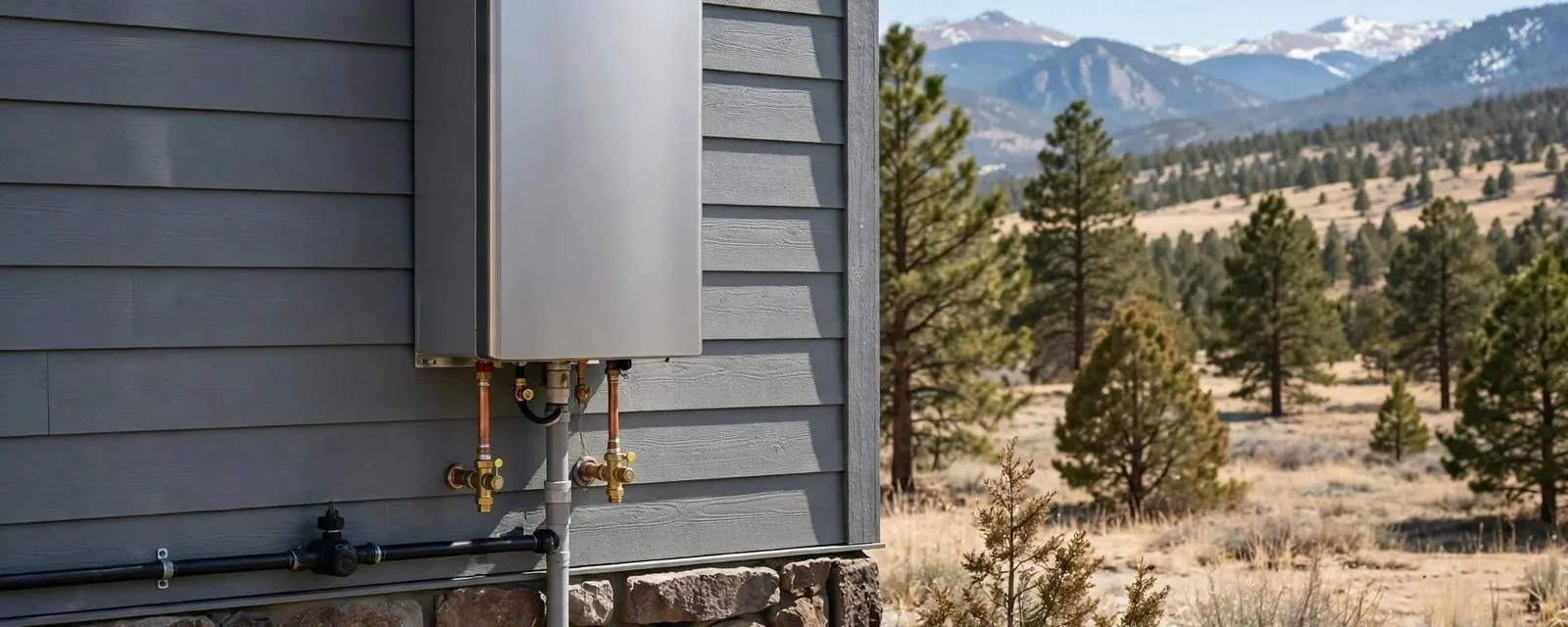
Yes, you can install a tankless water heater outside, as long as the model is rated for outdoor use. Outdoor units have weatherproof cabinets and a built-in vent, and they mount on an exterior wall. Indoor-only models must not be put outside, even in a mild climate.
In Lompoc the practical questions are about fog, salt air and the rare cold night, not heavy winter. Call (805) 249-7135 if you want a plumber to look at the wall, the gas line and the clearances before you buy.
Why people choose an outdoor tankless unit
- It frees garage or closet floor space.
- Venting is simpler, because exhaust goes straight outdoors.
- Combustion air is not a concern inside the house.
- Service access is easier, with the unit on an exterior wall.
- A gas unit moves any combustion risk outside the living space.
The trade-offs are weather exposure and a longer pipe run to the farthest fixture, which delays hot water arrival unless a recirculation line is added.
Indoor versus outdoor tankless, side by side
| Question | Outdoor unit | Indoor unit |
|---|---|---|
| Venting | Built-in, short or none | Requires a sealed vent run |
| Floor space | None inside | Needs wall space inside |
| Weather | Must handle rain, fog and wind | Protected |
| Freeze risk | Needs protection in rare cold snaps | Low |
| Service | Outside access | Inside access |
Whether you choose indoor or outdoor, the gas line size, electrical supply and manufacturer's clearances are the same issues. Our tankless water heater page covers sizing and flush service.
Thinking about going tankless?
Call for a wall, gas line and clearance check before you buy.
Weather: fog, salt air and the occasional cold night
Outdoor units are built to resist rain. Coastal humidity is a different test, because salt air accelerates corrosion on exposed fittings. Use stainless or coated fittings, keep the cabinet clean and avoid mounting where sprinklers spray the unit.
Freeze protection matters less here than in colder regions, but a unit with a built-in freeze protection feature gives you margin for a rare cold night. Water in the lines can freeze if the unit loses power or gas, so know what your model does.
Mount the unit above likely splash zones and keep plants and wood piles clear of the vent area.
Clearances, gas and electric supply
Every outdoor model lists minimum distances to windows, doors, vents and property lines. Following them is not optional. They protect against exhaust re-entering the house.
Gas tankless units need a larger gas line than a tank heater. Electrical supply is also needed for the controls and the fan. Your plumber will check the gas meter capacity and the line run before quoting. If the existing line is too small, upsizing is part of the price.
Lompoc local note: climate and permits
Lompoc has a cool Mediterranean climate. Published climate data list a record low of 20 degrees, average yearly rainfall of about 15.4 inches and common fog, with snow virtually unknown. That means outdoor installs are generally workable, with freeze protection as insurance for the rare cold night.
Permit rules are set by the City of Lompoc building division, which states that a permit is needed before work on plumbing, gas and mechanical systems and that this includes replacing systems. Call the counter to confirm what your project needs before you start.
Gas supply and electrical needs
A gas tankless unit can use far more gas per hour than a tank heater, even though it fires only on demand. Many homes need a larger gas line or a meter check. The plumber adds up the demand of every gas appliance in the house and compares it with the line size and length.
Electrical needs are small, usually a standard outlet or a dedicated circuit, but it must be protected from weather. Outdoor outlets need a weatherproof cover and ground fault protection. Do not run an extension cord to a permanent heater.
Maintenance for an outdoor unit
- Wipe the cabinet and vent cap to remove salt film and dust.
- Clear leaves, cobwebs and nests from the air intake.
- Flush the heat exchanger once a year to clear scale.
- Clean the inlet screen filter.
- Test the freeze protection and the drain valves before the coldest weeks.
- Keep a carbon monoxide alarm inside near the wall the unit is mounted on.
Spiders and wasps like warm cabinets, so check the vent openings each season. A blocked intake raises error codes and can shut the unit down. These tasks take minutes and save a service call.
Keep sprinklers pointed away from the cabinet. Constant spray corrodes fittings and trips the electronics. If your yard has a sprinkler head near the wall, move it before the install, not after.
Outdoor install planning, step by step
Pick the wall
Choose an exterior wall close to the existing gas and water lines, away from bedroom windows.
Check the meter
Confirm the gas meter and line can feed the unit and the rest of the house.
Choose a model
Select a unit rated for outdoor use with the flow rate your household needs.
Rough in the lines
The plumber runs gas, hot and cold water and a condensate path if the model is condensing.
Permit and inspection
The inspector checks gas, clearances and electrical.
Commission and teach
The installer tests the unit and shows you how to read the display and drain it.
A good plan avoids surprises. If the existing wall holds a meter, a dryer vent or an air conditioner, say so on the first call. Our water heater installation team can walk the wall with you and explain every clearance.
Homeowners in Santa Maria ask the same questions, and the answers are close to identical, though the city permit office is different.
Hot water wait times and recirculation
An outdoor unit sits farther from some fixtures. The longer pipe run adds seconds before hot water arrives, and the unit will fire only at flow rates above its minimum. A recirculation pump or point-of-use mini tank can fix this.
Hard water raises another maintenance point. Lompoc's city water averaged near 293 ppm of hardness in 2025, so descaling the heat exchanger on a regular schedule is part of owning a tankless unit. Install isolation valves from day one. If you are weighing a conventional tank, see water heater installation, and our service area page lists where we install.
Questions homeowners ask
No. Only models rated for outdoor use. An indoor model outside will fail and voids the warranty.
Rarely, but it can happen on a cold night if power or gas is lost. Choose a model with freeze protection.
It can accelerate corrosion on fittings. Use coated or stainless hardware and keep the cabinet clean.
Lompoc's building division says replacing systems needs a permit. Confirm what your project requires at the counter.
Outdoor-rated units are generally acceptable when installed per the manufacturer and code. The building division can answer specifics for your property.
The manufacturer lists the minimum distance in the manual. Follow it and local code.