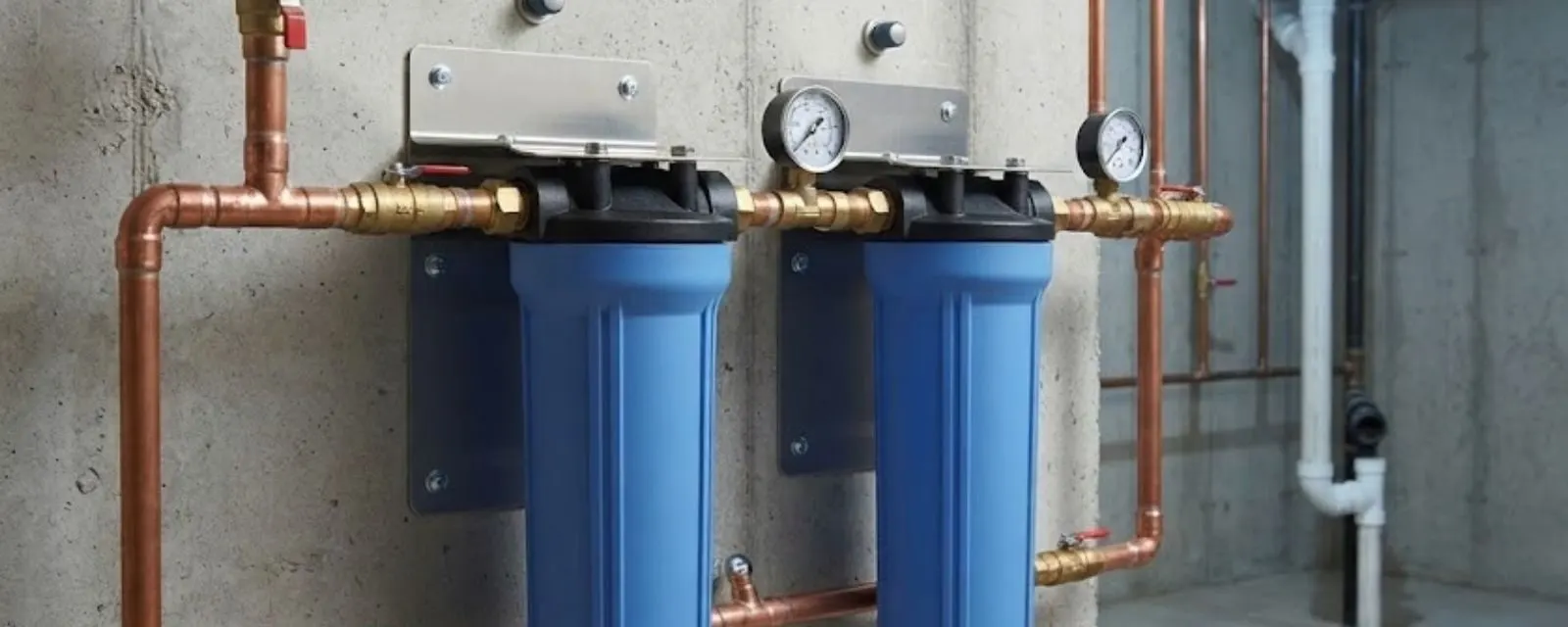
A whole house carbon filter is a tank or large cartridge on your main water line. Water passes through activated carbon, which traps chlorine, many odors and some organic compounds before they reach the house. The result is water that smells and tastes less like a swimming pool in the shower, the kitchen and the laundry room.
Carbon does not remove hardness minerals. If scale and spotting are your complaint, you need a softener, and many homes end up with both. Call (805) 249-7135 and we can look at your main line, pressure and space before you spend anything.
What carbon does well, and what it skips
| Concern | Carbon filter | Better tool |
|---|---|---|
| Chlorine taste and smell | Strong reduction | Carbon |
| Hard water scale | No effect | Salt-based softener |
| Sediment and sand | Partial | Sediment pre-filter first |
| Dissolved minerals and salts | No effect | Reverse osmosis at one tap |
| Some organic compounds | Reduced | Carbon, matched to the contaminant |
| Bacteria | Not a disinfectant | Not needed on treated city water |
Carbon is a polishing step. It makes already safe water more pleasant. It is not a replacement for the treatment the city performs, and it does not make untreated well water safe to drink.
Why bother in a city that meets drinking water standards
Meeting a standard and tasting good are different goals. Many people simply dislike the smell of chlorine in a hot shower, where steam carries it into the air. Others notice it in coffee, ice and baby formula.
- You smell chlorine in hot showers or near the washer.
- Your skin or hair feels dry after bathing.
- Ice cubes and coffee taste flat or chemical.
- You want a single system that treats every tap.
- You plan to add a softener and want to protect its resin from chlorine.
Chlorine smell in the shower?
Call for a main line check and a clear price before work starts.
Lompoc local note: free chlorine versus chloramine
The City of Lompoc's 2025 water quality report lists chlorine, measured as Cl2, at an average of 1.00 ppm and describes disinfection with chlorine. That is free chlorine, which activated carbon removes well. Some other California cities use chloramine instead, which carbon removes much more slowly, so advice from a neighboring town may not apply here.
The same report lists a pH near 8.4 and average hardness near 293 ppm. Carbon will not change either number. If you also want to reduce scale, read about water softener and filtration, since a softener and a carbon tank are often installed together with a bypass for outdoor taps.
Sizing, flow and pressure
A whole house filter must pass enough water for a morning when two showers, the dishwasher and the washer run together. An undersized tank drops pressure and wears out its carbon fast. Your plumber matches the tank to your pipe size, your peak flow and the number of bathrooms.
Installation and service
Choose the spot
After the main shutoff and pressure regulator, before the water heater, with room to change media.
Cut in the system
The plumber adds unions, a bypass and shutoffs so service is easy.
Backwash and test
New carbon is flushed of fines, then pressure and flow are checked at the farthest fixture.
Label and schedule
You get a service interval based on usage.
Most carbon needs replacement every few years, depending on water use and chlorine level. Skipping replacement turns the tank into a place where taste returns and flow drops. Ask what the media costs before you buy, because the ongoing cost matters as much as the first one.
Costs of ownership
The sticker price is only part of the cost. Consider the media or cartridge cost over several years, any backwash water used, the electrical needs of the control head and the service visits you might want. Compare the full picture before choosing.
A well-sized system often costs less per year than bottled water for the same household, and it removes the trips and plastic. We give a clear price before work starts, and we are happy to explain what each part costs.
Backwash, bypass and service
Most whole house carbon tanks backwash on a schedule, using water to loosen and flush the bed. The backwash needs a drain line, which the plumber plans early. A bypass valve lets you isolate the system during service.
If the system is a cartridge style, you replace the cartridge on a set schedule instead. It is simpler but costs more over time for larger homes. Ask which style fits your usage.
Either way, mark the calendar for service. Exhausted carbon stops working silently, so the taste simply returns without warning.
What to expect after installation
The first change most people notice is the smell. Showers feel fresher, and the laundry room loses the pool odor. Taste at the kitchen tap improves too, though anyone sensitive to mineral taste may still want an under-sink filter.
Pressure should stay the same. If it drops, call, because the tank may be undersized or the bed packed with fines that need another backwash. Mark the install date, the media type and the service schedule on the unit.
Choosing between carbon, softener and reverse osmosis
Pick based on the problem you notice. Smell and taste at every tap points to carbon. Scale on fixtures and dull glassware points to a softener. A mineral taste in drinking water points to reverse osmosis at the kitchen sink, covered in a separate drinking water guide.
We install and service systems across the service area, including Santa Maria, and handle the cut-in work under plumbing installation. Describe the symptoms on the phone and we will say honestly which tool fits.
Questions homeowners ask
No. Carbon reduces chlorine and odors. Hardness needs a softener.
Every few years for most homes. Usage and chlorine level set the schedule.
A properly sized system does not. An undersized one can.
The city's 2025 report lists chlorine measured as Cl2 near 1.00 ppm. Activated carbon removes free chlorine well.
Adding equipment to a water line can be classed as plumbing work, so ask the City of Lompoc building counter about your install.
Only with the owner's permission, since it is cut into the main line.